
NXP i.MX 8M Plus EVK Devkit#
Introduction#
This section covers the assembly instructions for the FSM:GO module designed to interface with the NXP platform. Currently, only the i.MX 8M Plus EVK platform is supported. This document will guide you through the steps required to properly assemble and connect your hardware using various cabling solutions.
Pre-assembly Information#
The FSM:GO sensor module typically ships pre-assembled with a standard lens mount and the lens of your choice. If you need to replace or customize the lens mount, refer to the M12 Lens Kit User Guide.
Requirements#
Hardware
i.MX 8M Plus EVK
FPA-A/NDK-V1A
FMA-CBL-IPASS-230/36-V1A
FMA-FC-150/60-V1A
FMA-SCW/01-KIT
FSM:GO
Software
Internet connection for package installation
Access to the FRAMOS NXP Driver repository
1. Add an M12 lens mount (optional)#
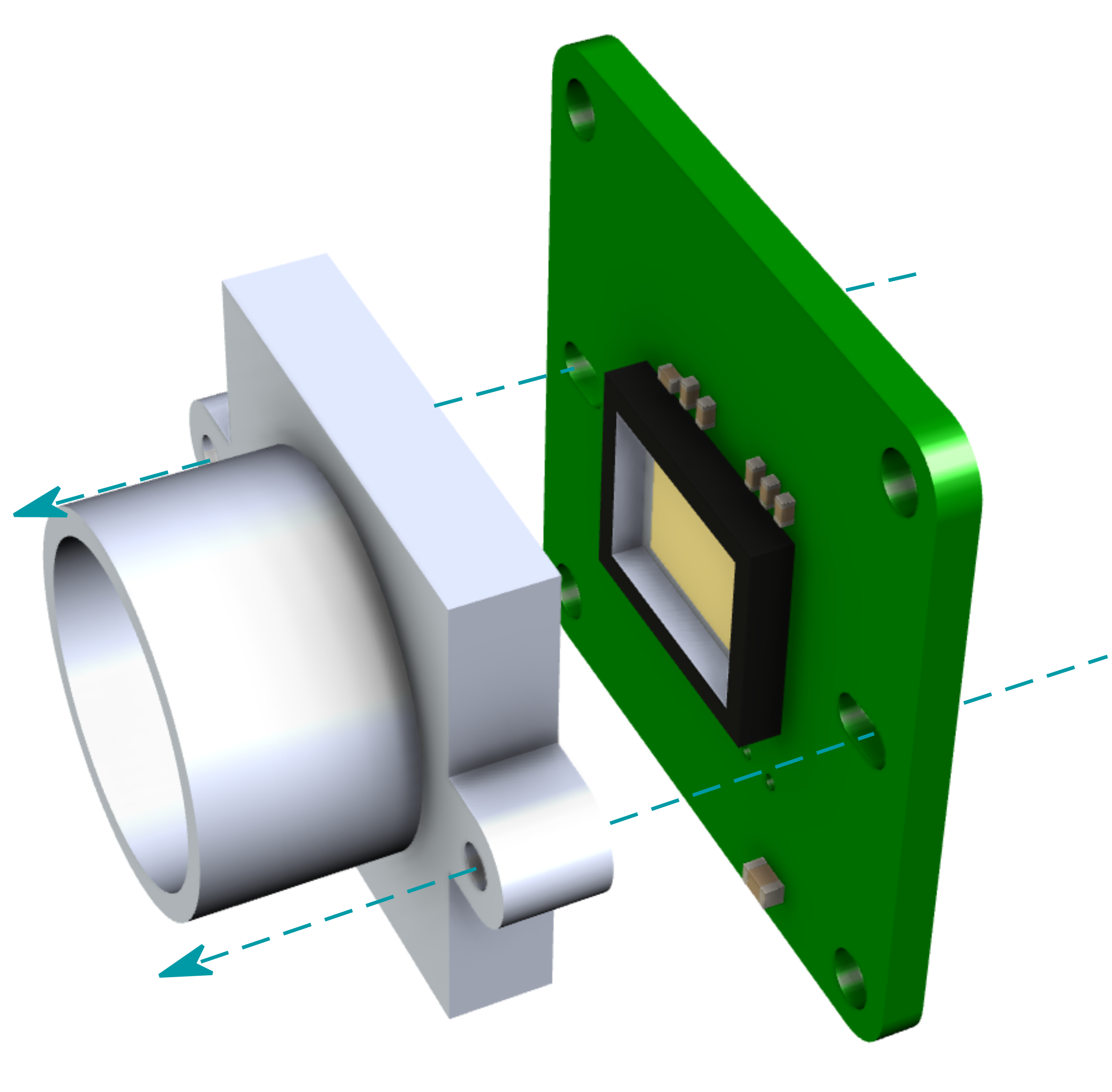
Prior to assembling the FSM to the FPA, screw an optional M12 lens mount to the FSM.
Fitting screws are provided with the lens mount. If assembling a third-party mount, refer to the technical drawings for the specific module to confirm hole diameters and select the appropriate screws.
Note
The FSM:GO sensor module is shipped pre-assembled with the default lens mount and lens.
If change is needed, refer to the M12 Lens Kit User Guide for detailed instructions on changing the mount.
2. Add Flex Cable (optional)#
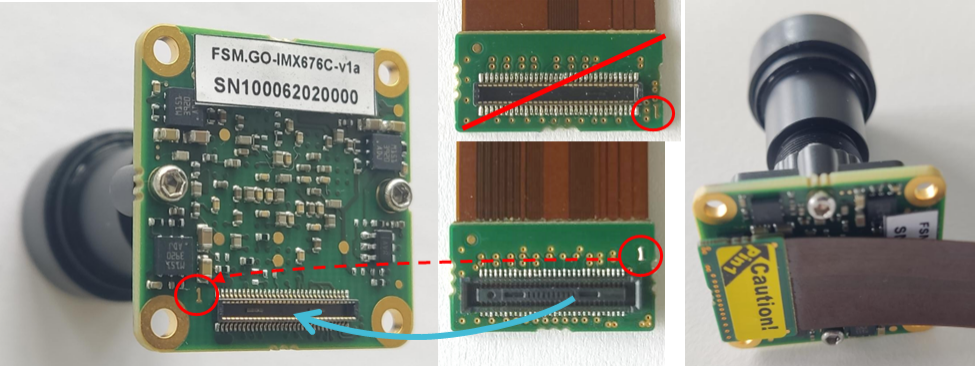
Connect the rear side of the FSM:GO module to the appropriate side of the FMA-FC-150/60 flex cable by pressing the two 60-pin pixelmate connectors together. Do the same with the other end of the cable and the FPA.
Note
Always ensure that the lens mount is securely fastened to prevent any movement during operation.
Assembly Instructions for Different Cabling Solutions#
Connecting the FSM:GO module to the FPA-A/NDK can be done through multiple cabling solutions. Each approach supports different hardware needs and integration scenarios. Below are detailed assembly procedures for each option.
Scenario 1: PixelMate™ Flex Cable Connection#
Requirements:
FSM:GO module
FMA-FC-150/60 Flex Cable
FPA-A/NDK
Step 1: Connecting the FSM:GO Module to Flex Cable#
Orientation Check: Identify pin 1 on both the FSM:GO module and the FMA-FC-150/60 cable. Proper alignment is critical for functionality.
Connection: Align the 60-pin PixelMate connectors and press them together gently until fully engaged.
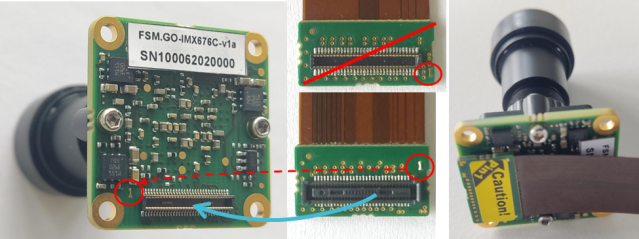
FSM:GO module connected to the flex cable.#
Connection: Attach the opposite end of the FMA-FC-150/60 flex cable to the PixelMate connector on the FPA-A/NDK.
Notes:
- Ensure that the orientation of the connectors is correct before
pressing them together to avoid damaging the pins.
- Visual cues on the connectors can help align the pins correctly.
Look for markings or notches that indicate pin 1.
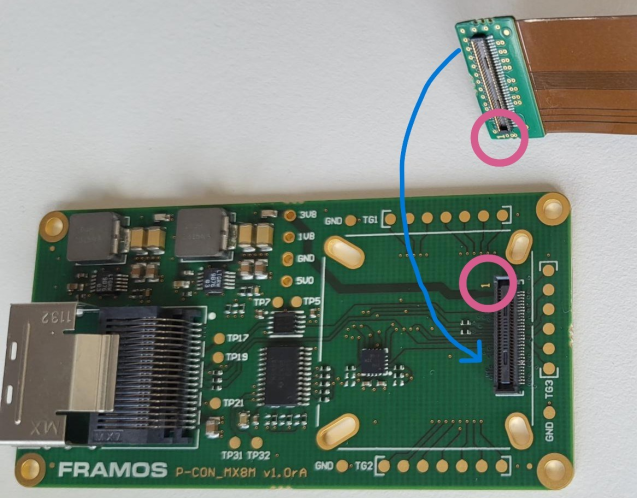
Flex cable connected to the FPA-A/NDK adapter.#
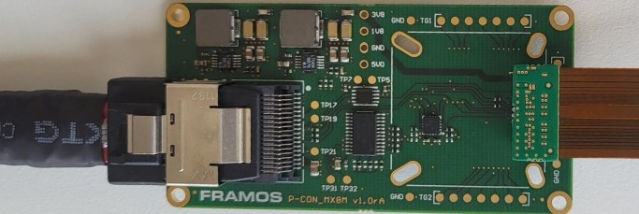
Completed NDK flex cable connection.#
Scenario 2: FFC Cable Connection#
Requirements:
FSM:GO module
FFA-FFC40/Kit-0.2m-v1a
FMA-FC-150/60 (optional)
FPA-A/NDK
Step 1: Preparing the FFA-FFC40/Kit (Optional)#
The FFC cable may arrive pre-assembled. If not, connect the FFC cable securely to the adapter boards. Ensure the connectors are fully seated and secure.
Visual Check: Use the diagram to confirm correct cable insertion.
Step 2: Connecting the FFA-FFC Adapter to FSM:GO Module#
Orientation Check: Align the 60-pin PixelMate connectors of the FFA-FFC adapter (sensor side) and the FSM:GO module. It is crucial to match pin 1 on both connectors to ensure correct orientation.
Connection: Press the connectors together firmly until they are securely engaged.
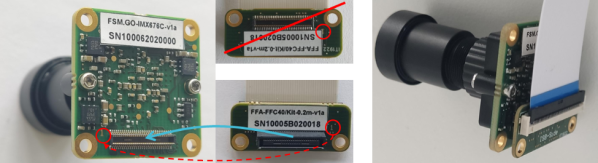
FFA-FFC adapter connected to FSM:GO module.#
Step 3: Connecting the FFA-FFC Adapter to FPA-A/NDK#
Orientation Check: Ensure the correct alignment of the 60-pin connectors when connecting the FFA-FFC adapter (processor side) to the FPA-A/NDK.
Connection: Firmly press the connectors together, ensuring they are properly aligned and locked in place.
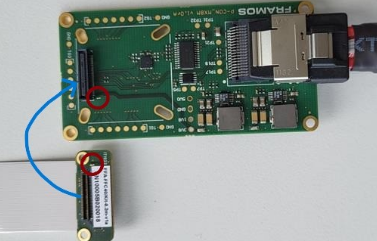
FFA-FFC adapter connected to FPA-A/NDK.#
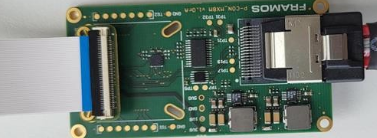
Completed FFA-FFC adapter connection.#
Scenario 3: Micro-Coax Cable Connection#
Requirements:
FSM:GO module
FFA-MC50/Kit-0.3m-v1a
FMA-FC-150/60 (optional)
FPA-A/NDK
Step 1: Preparing the FFA-MC50/Kit (Optional)#
- If not pre-assembled, manually connect the Micro-Coax cable to the
adapter board. Ensure a snug fit.
- Visual Check: Refer to the images under Step 2 to verify proper
connector seating.
Step 2: Connecting the FFA-MC Adapter to FSM:GO#
Orientation Check: Identify pin 1 on both the FSM:GO module and the FFA-MC adapter (sensor side). Correct alignment is essential for proper functionality.
Connection: Align and press the 60-pin PixelMate connectors together until they securely engage.
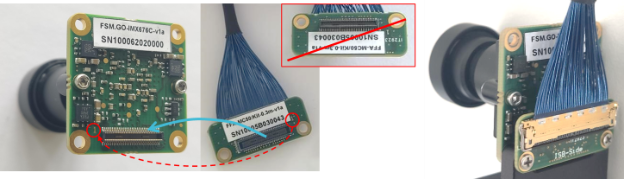
FFA-MC adapter connected to FSM:GO module.#
Step 3: Connecting FFA-MC Adapter to FPA-A/NDK#
- Connect the FFA-MC adapter (processor side) directly to the PixelMate
connector on the FPA-A/NDK.
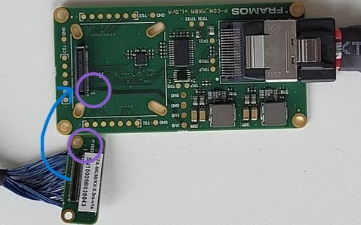
FFA-MC adapter connected to FPA-A/NDK.#
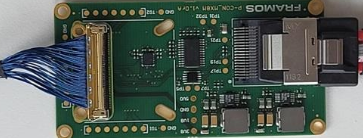
Completed Micro-Coax cable connection between FSM:GO module and FPA-A/NDK adapter.#
Scenario 4: GMSL Cable Connection#
Requirements:
FSM:GO module
FFA-GMSL/SerDes-Kit
FMA-FC-150/60 (optional)
FPA-A/NDK
Step 1: Connecting the FFA-GMSL-Ser-V2A to FSM:GO#
Orientation Check: Identify and align pin 1 on both the FSM:GO module and the FFA-GMSL-Ser-V2A to ensure proper connectivity.
Connection: Press the 60-pin connectors together firmly until they securely engage.
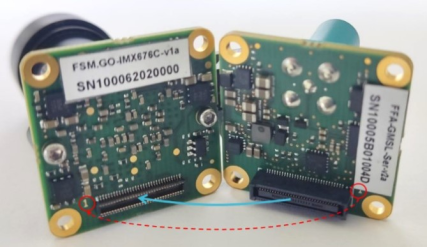
FFA-GMSL-Ser-V2A connected to FSM:GO module.#
Step 2: Connecting the FFA-GMSL-Des-V2A to FPA-A/NDK#
- Connect the FFA-GMSL-Des-V2A directly to the PixelMate connector on
the FPA-A/NDK.
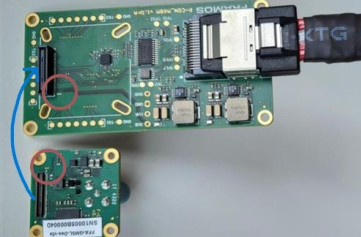
FFA-GMSL-Des-V2A connected to FPA-A/NDK.#
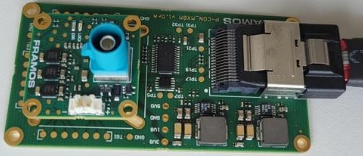
Completed GMSL deserializer connection to FPA-A/NDK.#
Step 3: Adding GMSL Cable and Power Connection#
GMSL Cable Connection: Insert the GMSL cable between the FFA-GMSL-Ser-V2A and FFA-GMSL-Des-V2A to establish data transmission pathways.
Power Connection: Attach the power connector to the FFA-GMSL-Des-V2A.
Important
Do not switch on the power supply yet. This prevents any potential electrical damage during setup.
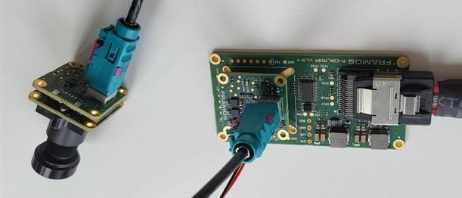
GMSL cable and power connection.#
Caution
Incorrect cable or connector orientation can lead to permanent damage to the hardware. Always double-check the alignment before making connections.
Ensure the power supply is off while making connections to avoid any electrical issues.
Scenario 5: No Cable Connection#
Overview:
The FSM:GO module can be directly connected to the FPA-A/NDK via the PixelMate connector without any intermediate cable.
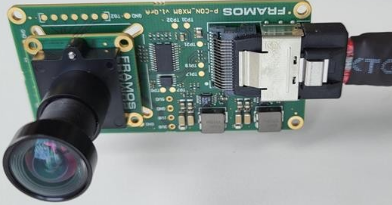
Direct FSM:GO module connection to FPA-A/NDK via PixelMate connector.#
Connecting the FPA to the i.MX 8M Plus EVK
- Connect the FMA-CBL-IPASS-230/36-V1A to the Molex connector of the
FPA board and connect the other end to the camera interface (for example: CSI1 MIPI).
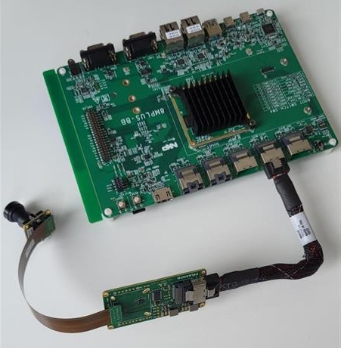
FPA board connected to i.MX 8M Plus EVK using the FMA-CBL-IPASS-230/36-V1A cable.#
Software Installation#
To set up your Framos camera module on your NXP i.MX 8M Plus EVK devkit, all required drivers, device tree overlays, and installation instructions are provided in the official Framos GitHub repositories:
This repository contains:
Device tree overlays for supported image sensor modules
Installation scripts to simplify setup
Configuration examples for different use cases
Make sure to review the Release Notes in the GitHub repository’s README.md file (available on the latest release branch) to verify that your specific sensor module is supported before proceeding with the installation.
Framos Streaming Tool for NXP Platforms
This repository is essential for enabling camera functionality for the NXP devkit.
It includes:
V4L2 camera streaming framework for NXP platforms
DMA and GPU-accelerated image processing pipeline
Camera/ISP control through V4L2 and Vivante APIs
Configuration and sample application for image capture and display
Without this component, camera and ISP functionality will not work.
For the most up-to-date guidance and sensor compatibility, always refer to the repositories above.