
IMX678C#
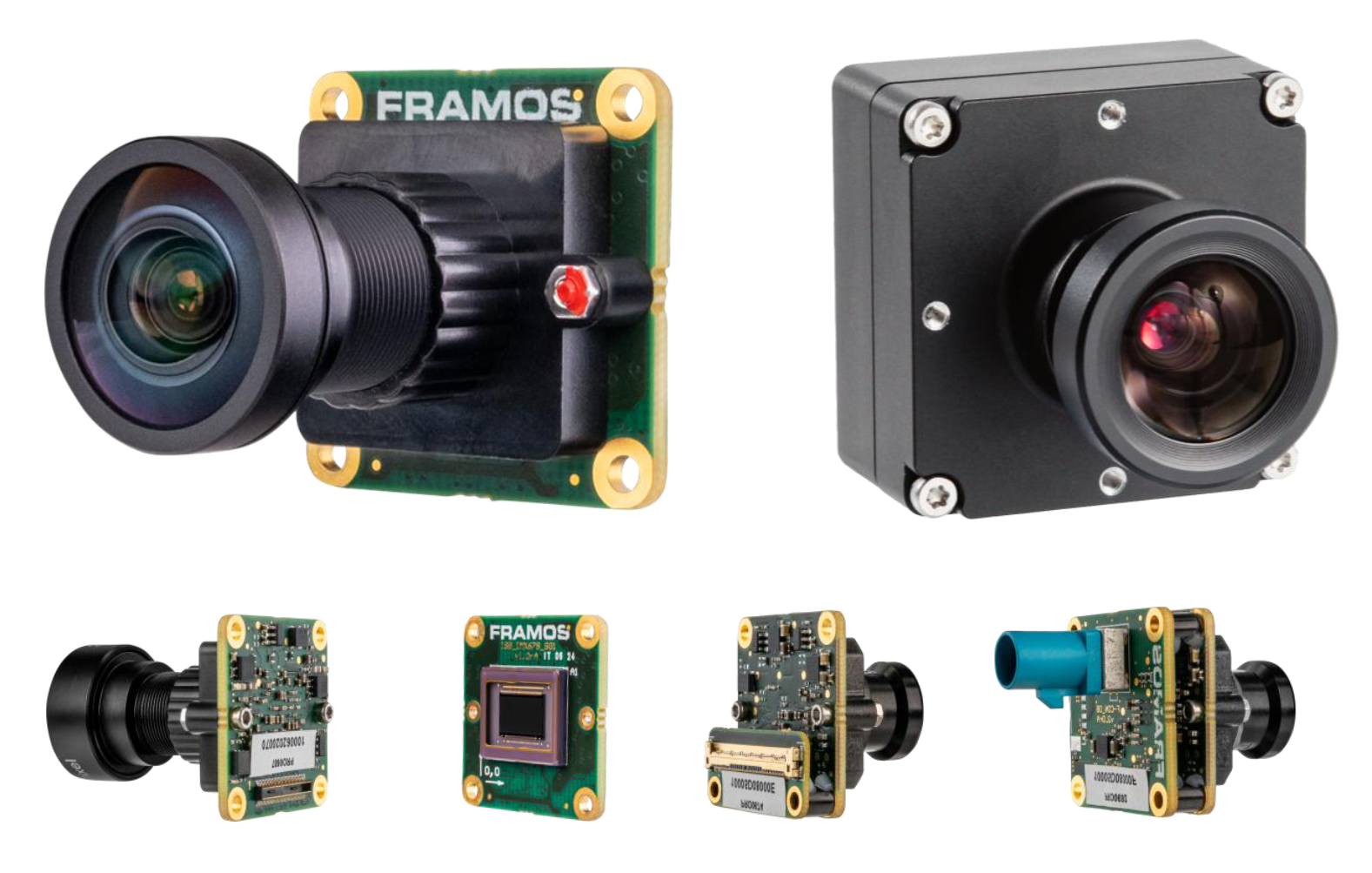
An 8MP/4K optical sensor module with the Sony Starvis2 low-light image sensor.
Product Specification - Overview#
Sensor Module#
Type |
Sony IMX678-AAQR1 (AR) |
Shutter Type |
CMOS Rolling Shutter |
Technology |
Starvis2 |
Spectrum |
Color (RGB) |
Optical Format |
1/1.8” |
Pixel Size |
2 x 2 µm |
Resolution (max.) |
3840 x 2160 (4K / 8MP) |
Framerate (max.)* |
10Bit: 72.05 FPS 12Bit: 60.00 FPS |
Bit Depth* |
10 / 12 bit |
Communication |
I²C |
*Platform dependent`
Platform Support (Driver, ISP)#
NVIDIA |
Jetson Family (Orin, Thor) |
NXP |
i.MX8MP |
Raspberry Pi |
RPi5 |
Lens Option(s)#
FOV (H) |
54° |
100° |
110° |
Optical Filter |
IR cut (650 nm) |
IR cut (660 nm) |
IR cut (650 nm) |
Aperture |
F/2 |
F/2.7 |
F/2 |
Interface Option(s)#
Data Interface |
MIPI CSI-2 v1.2 (D-PHY v2.1) |
GMSL3/2 (12Gbps, 6Gbps) |
Physical Interface |
PixelMate (60 pin) Micro Coax (50 pin) FFC (40 pin) (unshielded) P22 (22pin FPC, RPi5-Type) |
FAKRA (Single Coax) |
Power Supply |
DC (one or two voltages) |
Power over Coax (12V) |
Power Cons. (3.8V) |
280mW |
|
Power Cons. (1.8V) |
260mW |
|
Power Cons. (Max) |
540mW |
1.1W |
Mechanical Specification#
Dimensions [mm] |
Board: 26.5 (W) x 26.5 (D) Housed: 34 (W) x 34 (D) (H): Lens depending |
Housing |
Optional, GMSL3 only |
Lens Mount |
M12 x 0.5 (var. options) |
Applications:#
Security and surveillance
Drones - AGV and AGVs
Streaming and conferencing
Sport analytics
Mapping, digital twins
Industrial, robotics
Environmental#
Ingress Protection |
Board: None Housed: min. IP40 |
Operating Temperature |
-30° to +85°C* |
Storage Temperature |
-40°to +85°C* |
Ambient Humidity |
Max 95% RH, non-condensing |
*Sensor module without lens, check Lens Options for configurations with Lens.
Order Code Scheme/Options#
FSM:GO-IMX678C-[LM]-[L]-[FS][FD]-[IF]-[MH]-A1Q1#
LM: Lens Holder (Optional)
M12: Lens Matched
M12A: 8.6 mm Height
M12B: 12.5 mm Height
M12C: 16.2 mm Height
M12D: 7.9 mm Height
M12H: Housing
L: Lens Type (Optional)
L54A: 54° HFOV (LM: M12, M12H)
L100A: 100° HFOV (LM: M12, M12H)
L110A: 110° HFOV (LM: M12, M12H)
FS: Focusing Service (Optional)
FCS: Center Focusing (L: Required)
FD: Focusing Distance
HYP: Hyperfocal Distance
xxxx: Custom Distance in mm
IF: Interface (Mandatory)
PM: PixelMate (60 pin)
MC50A: MicroCoax (50 pin)
FFC40A: Flat-Flex Cable (40 pin)
GMSL3A: GMSL3 (FAKRA, Single Coax)
P22A: FPC Cable (22 pin)
Lens Options#
Module Specification#
Lens Type (PN) |
FLP- AM-077-00-V-01 |
FLP- HM-045-02-V-03 |
FLP- AM-040-02-V-03 |
Field of View [°] |
|
|
|
Horizontal |
54 |
100 |
110 |
Vertical |
32 |
55 |
62 |
Diagonal |
61 |
114 |
127 |
Aperture (F-Number) |
F/2 |
F/2.7 |
F/2 |
Optical Filter |
IRC@650 (±10nm) |
IRC@660 (±10nm) |
IRC@650 (±10nm) |
Mount Thread |
M12 x 0.5 |
M12 x 0.5 |
M12 x 0.5 |
Mating Mount (PN) |
Lens Matched |
Lens Matched |
Lens Matched |
Temperature Range |
-20°to +70°C* |
-40°to +85°C* |
-30°to +85°C* |
Sensor Coverage |
|
|
|
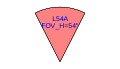
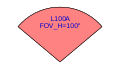
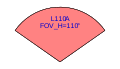
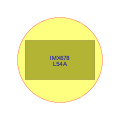
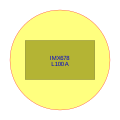
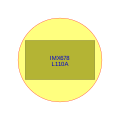
*Image tuning and assembly are performed at 25°C. Temperature variations may affect performance and focus.`
Lens Specification#
Focal length [mm] |
7.68 |
4.5 |
4 |
Min. Object Distance [m] |
0.1 |
0.1 |
0.3 |
Hyperfocal Distance [m] |
7.38 |
1.88 |
2.00 |
Max. Image Circle [mm] |
9.4 |
11.06 |
9.25 |
Back Focal Length [mm] |
8.86 |
7.33 |
6.5 |
Distortion [%] |
-2.19 (F-Tan-Theta) |
-35.8 (F-Tan-Theta) |
-0.177 (F-Theta) |
Rel. Illumination [%] |
55 |
86 |
30 |
Max. CRA [°] |
10.8 |
9.2 |
14.5 |
TTL [mm] |
33.62 |
29.64 |
31.61 |
Construction |
9 (Glass) |
7 (Glass) |
8-7 (Glass) |
Lens Barrel Material |
Metal |
Metal |
Metal |
Focusing Service and Focusing Distance#
Specification#
Description |
No Focusing 1 |
Focusing to Hyperfocal |
Focusing to Custom Distance |
|---|---|---|---|
Type (Code) |
N/A |
FCSHYP |
FCS[FD] |
Focus Distance |
N/A |
Hyperfocal Distance [HYP]2 |
Custom Focus Distance [FD]3 |
Focus Target |
N/A |
Virtual Image (Collimator) |
Virtual Image (Collimator) |
Focus Area 4 |
N/A |
Image Center |
Image Center |
Lens Fixation |
N/A |
Permanent (Epoxy) |
Permanent (Epoxy) |
1Lens is properly screwed into the lens mount without focusing and fixation.
2Please see “Hyperfocal Distance [m]” in the Lens Specifications table.
3Please see “Min. Object Distance [m]” to infinity in the Lens Specifications table.
4Please see Figure 3.1 below showing the virtual target at the image’s center as the focus area.
Focus Area#
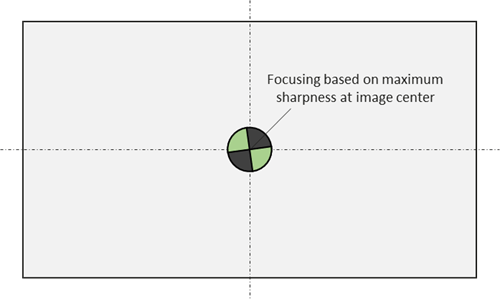
Figure 3.1#
Lens Mount Options#
Specification#
Type (Code) |
M12 |
M12A |
M12B |
M12C |
M12D |
M12H |
|---|---|---|---|---|---|---|
Type (PN) |
Lens Matched |
FLA-MA -M-08622-00 |
FLA-MI -M-12522-00 |
FLA-MO -M-16222-00 |
FLA-M C-M-07922-00 |
N/A |
Thread Type |
M12 x 0.5 |
M12 x 0.5 |
M12 x 0.5 |
M12 x 0.5 |
M12 x 0.5 |
M12 x 0.5 |
Height [mm] |
8.6 |
12.5 |
16.2 |
7.9 |
Lens Matched |
|
Material |
PC+30%GF |
ABS |
C1200 PC/ABS |
PC+10%GF |
Aluminum |
|
Appearance [Color] |
Black |
Black |
Black |
Black |
Black |
Black (Anodized) |
Interface Options#
Type (Code) |
PM |
MC50A |
FFC40A |
GMSL3A |
P22A |
|---|---|---|---|---|---|
Description |
PixelMate |
Micro-Coax |
Flat-Flex Cable |
GMSL/SerDes |
FPC/FFC |
FSM:GO Integration |
Default FSM:GO Interface |
Adapter Board (Piggyback) |
Adapter Board (Piggyback) |
Adapter Board (Piggyback) |
Adapter Board (Piggyback) |
Interface Standard |
FRAMOS PixelMateC |
Proprietary |
Proprietary |
GMSL, FAKRA Coaxial |
Raspberry Pi 5 , Jetson Nano / NX Compatible |
Connector Type |
Hirose DF40C-60 DP-0.4V(51) |
I-PEX 20 525-050E-02 |
Molex 5051104091 |
Amphenol RF 2FA1 -NZSP-PCBB6 |
Hirose FH12-22 S-0.5SVA(54) |
Pin Count [#] |
60 |
50 |
40 |
1+GND |
22 |
Pin Pitch [mm] |
0.4mm |
0.4mm |
0.5mm |
0.5mm |
|
Locking Style |
S elf-locking |
Mechanical locking |
Mechanical locking |
Mechanical locking |
Mechanical locking |
Shielding |
Yes |
Yes |
No |
Yes |
Yes |
Power Supply [V] |
3V8, 1V8 |
3V8, 1V8 |
3V8, 1V8 |
12V (Power over Coax) |
3V3 |
Data Lanes /Bandwidth |
4-Lanes, 2.5 Gbps (ea.) |
4-Lanes, 2.5 Gbps (ea.) |
4-Lanes, 2.5 Gbps (ea.) |
1-Line at 12Gbps (10Gbps Effective) |
4-Lanes, 2.5 Gbps (ea.) |
Mating Connector |
Hirose DF40C-60 DS-0.4V(51) |
I-PEX 20 525-050E-02 |
Molex 5051104091 |
Amphenol RF 2FA1 -NZSP-PCBB6 |
Hirose FH12-22 S-0.5SVA(54) |
Mating Cable(s) |
FM A-FC-150/60 |
FMA-CB L-MC50-0.3m |
Molex 0150200440 |
FMA-CB L-FAK.LD302 |
FMA-CBL-F FC22-0.2m |
Receiver Boards |
Various FPAs |
FFA-MC50/A |
FFA-FFC40/A |
FFA- GMSL-DES-V2 |
Pinouts#
Warning
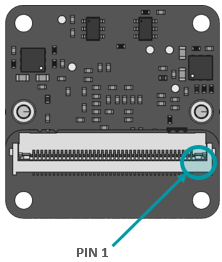
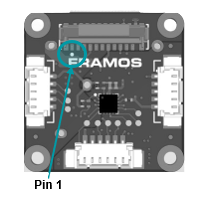
Pin 1 is identified on the board. Orient accordingly, paying close attention to the pin number in reference to the locater view illustrated below. Failure to align correctly will cause permanent damage.
PixelMate:#
Type: Hirose DF40C-60DP-0.4V(51) |
Pinout |
Pinout |
Pinout |
Pinout |
||||
|---|---|---|---|---|---|---|---|---|
|
1 |
3V8_VDD |
16 |
NC |
31 |
NC |
46 |
D_DATA_3_P |
2 |
1V8_VDD |
17 |
NC |
32 |
TOUT0 |
47 |
NC |
|
3 |
3V8_VDD |
18 |
NC |
33 |
NC |
48 |
D_DATA_3_N |
|
4 |
1V8_VDD |
19 |
XMASTER |
34 |
NC |
49 |
GND |
|
5 |
NC |
20 |
TOUT1 |
35 |
SLAMODE0 |
50 |
GND |
|
6 |
NC |
21 |
I2C_SCL |
36 |
SLAMODE1 |
51 |
D_DATA_0_N |
|
7 |
NC |
22 |
NC |
37 |
GND |
52 |
D_DATA_1_N |
|
8 |
NC |
23 |
NC |
38 |
GND |
53 |
D_DATA_0_P |
|
9 |
NC |
24 |
NC |
39 |
NC |
54 |
D_DATA_1_P |
|
10 |
NC |
25 |
XVS |
40 |
NC |
55 |
GND |
|
11 |
GND |
26 |
NC |
41 |
NC |
56 |
GND |
|
12 |
GND |
27 |
I2C_SDA |
42 |
NC |
57 |
D_DATA_2_P |
|
13 |
GND |
28 |
NC |
43 |
GND |
58 |
D_CLK_0_P |
|
14 |
GND |
29 |
XHS |
44 |
GND |
59 |
D_DATA_2_N |
|
15 |
IS_RST_0 |
30 |
TENABLE |
45 |
NC |
60 |
D_CLK_0_N |
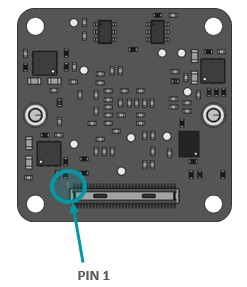
Note
Pixelmate connectors use serpentine pin numbering as opposed to the standard numbering method.
MC50:#
Type: I-PEX 20525-050E-02 |
Pinout |
Pinout |
Pinout |
Pinout |
||||
|---|---|---|---|---|---|---|---|---|
|
1 |
GND |
14 |
D_DATA_3_N |
27 |
NC |
40 |
NC |
2 |
D_CLK_0_N |
15 |
D_DATA_3_P |
28 |
XVS |
41 |
NC |
|
3 |
D_CLK_0_P |
16 |
GND |
29 |
NC |
42 |
NC |
|
4 |
GND |
17 |
NC |
30 |
NC |
43 |
NC |
|
5 |
D_DATA_2_N |
18 |
SLAMODE1 |
31 |
I2C_SCL |
44 |
NC |
|
6 |
D_DATA_2_P |
19 |
SLAMODE0 |
32 |
TOUT1 |
45 |
GND |
|
7 |
GND |
20 |
NC |
33 |
XMASTER |
46 |
1V8_VDD |
|
8 |
D_DATA_1_P |
21 |
NC |
34 |
NC |
47 |
1V8_VDD |
|
9 |
D_DATA_1_N |
22 |
TOUT0 |
35 |
NC |
48 |
GND |
|
10 |
GND |
23 |
NC |
36 |
NC |
49 |
3V8_VDD |
|
11 |
D_DATA_0_P |
24 |
TENABLE |
37 |
IS_RST_0 |
50 |
3V8_VDD |
|
12 |
D_DATA_0_N |
25 |
XHS |
38 |
GND |
|||
13 |
GND |
26 |
I2C_SDA |
39 |
NC |
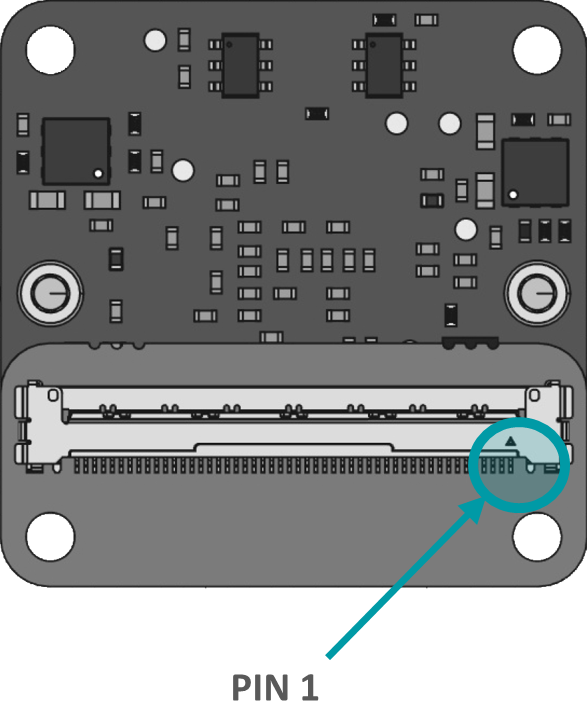
FFC40:#
Type: Molex 5051104091 |
Pinout |
Pinout |
Pinout |
Pinout |
||||
|---|---|---|---|---|---|---|---|---|
|
1 |
GND |
11 |
D_DATA_0_P |
21 |
NC |
31 |
NC |
2 |
D_CLK_0_N |
12 |
D_DATA_0_N |
22 |
XHS |
32 |
NC |
|
3 |
D_CLK_0_P |
13 |
GND |
23 |
XVS |
33 |
NC |
|
4 |
GND |
14 |
D_DATA_3_N |
24 |
I2C_SDA |
34 |
GND |
|
5 |
D_DATA_2_N |
15 |
D_DATA_3_P |
25 |
I2C_SCL |
35 |
1V8_VDD |
|
6 |
D_DATA_2_P |
16 |
GND |
26 |
XMASTER0 |
36 |
1V8_VDD |
|
7 |
GND |
17 |
NC |
27 |
IS_RST_0 |
37 |
GND |
|
8 |
D_DATA_1_P |
18 |
GND |
28 |
NC |
38 |
3V8_VDD |
|
9 |
D_DATA_1_N |
19 |
NC |
29 |
NC |
39 |
3V8_VDD |
|
10 |
GND |
20 |
NC |
30 |
NC |
40 |
GND |
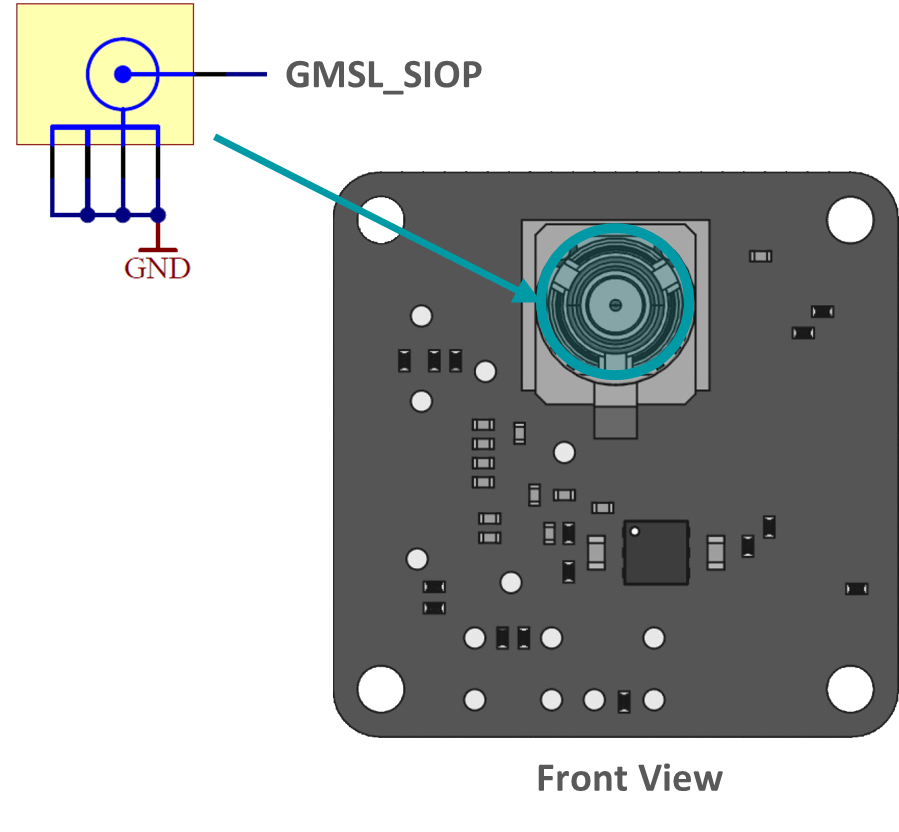
GMSL3A:#
Type: 2FA1-NZSP-PCBB6 |
Pinout |
|
|---|---|---|
|
1 |
GMSL_SIOP |
2 |
GND |
P22A:#
Type: Hirose FH 12-22S-0.5SVA(54) |
Pinout |
Pinout |
||
|---|---|---|---|---|
|
1 |
GND |
12 |
D_DATA_2_P |
2 |
D_DATA_0_N |
13 |
GND |
|
3 |
D_DATA_0_P |
14 |
D_DATA_3_N |
|
4 |
GND |
15 |
D_DATA_3_P |
|
5 |
D_DATA_1_N |
16 |
GND |
|
6 |
D_DATA_1_P |
17 |
IS_RST_0 |
|
7 |
GND |
18 |
MCLK_IN |
|
8 |
D_CLK_0_N |
19 |
GND |
|
9 |
D_CLK_0_P |
20 |
I2C_SCL_IN* |
|
10 |
GND |
21 |
I2C_SDA_IN* |
|
11 |
D_DATA_2_N |
22 |
3V3_VDD |
*LVCMOS33 (3.3V) logic is to be applied!
The three Molex Microblade connectors (left, bottom, right sides) provide access to several other sensor signals – like XVS, XHS, XTRIG and TOUT - that can be used for synchronization of multiple sensors to each other or to an external source (i.e. a microcontroller). Check the online documentation about FPA-A/P22-V2 for more details.
Signal Description#
3V8_VDD I/O Type Power Function 3.8V Power supply Connected to LDO_IC DC Charact. 3V8_VDD=3.7V-5.1V, max. 0.3A per line |
1V8_VDD I/O Type Power Function 1.8V Power supply Connected to LDO_IC DC Charact. 1V8_VDD=1.7V-1.9V, max. 0.3A per line |
IS_RST_0 I/O Type IN Function Image sensor reset (XCLR) Connected to Reset_IC I/O Standard LVCMOS18 (1.8V) I/O State Normal: High, Reset: Low DC Charact. VILmax=0.36V, VIHmin=1.44V |
SLAMODE0/1 I/O Type IN Function I2C slave address configuration Connected to Image Sensor, pull-down res. 10k I/O Standard LVCMOS18 (1.8V) DC Charact. VILmax=0.36V, VIHmin=1.44V |
I2C_SCL I/O Type IN/OUT Function I2C clock Connected to Image Sensor, no pull-up I/O Standard LVCMOS18 (1.8V) DC Charact. VILmax=0.54V, VIHmin=1.26V |
I2C_SDA I/O Type IN/OUT Function I2C data Connected to Image Sensor, no pull-up I/O Standard LVCMOS18 (1.8V)¹ DC Charact. VILmax=0.36V, VIHmin=1.44V |
XMASTER I/O Type IN Function Image sensor master/slave Connected to Image Sensor, pull-down res. 10k I/O Standard LVCMOS18 (1.8V) DC Charact. VOLmax=0.36, VOLmin=1.44V |
XVS / XHS I/O Type IN/OUT Function Vertical/Horizontal sync signal Connected to Image Sensor, pull-up res. 10k I/O Standard LVCMOS18 (1.8V) DC Charact. VILmax=0.36V, VIHmin=1.44V, VOLmax=0.2V, VOHmin=1.6V |
TENABLE I/O Type IN Function Test enable Connected to Image Sensor I/O Standard LVCMOS18 (1.8V) DC Charact. VILmax=0.36V, VIHmin=1.44V |
TOUT0/1 I/O Type OUT Function Test output pins from image sensor Connected to Image Sensor I/O Standard LVCMOS18 (1.8V) DC Charact. VOLmax=0.36V, VOHmin=1.44V |
D_DATA_#_P/N I/O Type OUT Function MIPI-CSI2 output data (Lane #, Positive/Negative) Connected to Image sensor I/O Standard MIPI D-PHY |
D_CLK_0_P/N I/O Type OUT Function MIPI-CSI2 output clock (Positive/Negative) Connected to Image sensor I/O Standard MIPI D-PHY |
I2C Address Configuration (SLAMODE)#
SLAMODE1 |
SLAMODE0 |
I2C Address |
|---|---|---|
0 |
0 |
0x1A |
0 |
1 |
0x10 |
1 |
0 |
0x36 |
1 |
1 |
0x37 |
Note
The FRAMOS driver uses the I2C Address 0x1A by default.
Users can configure additional SLAMODE signals via DIO (Digital Input/Output) pins from the host to set a different I2C Address.
When using multiple sensors on the same host, ensure each sensor is assigned a unique I2C Address to avoid conflicts.
Power-On Sequencing#
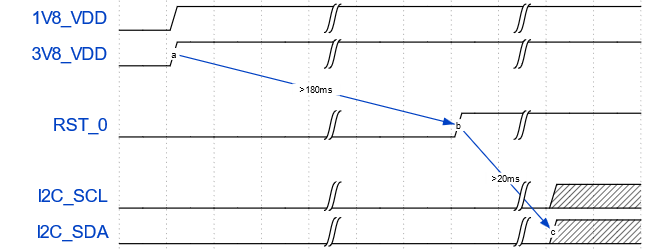
For correct function, the host system must follow the below timing to properly power up or reset the module.
3V8_VDD should be generated after 1V8_VDD, or, ideally at the same time. The RST_0 pin should be low after powering up PixelMate voltage rails; 180 ms.
Legend#
Times and voltages which are represented in the above figure are as follows:
3V8_VDD - 3V8 voltage supply from host
1V8_VDD - 1V8 voltage supply from host
RST_0 - reset signal driven from the host
I2C_SCL - I2C Clock
I2C_SDA - I2C Data
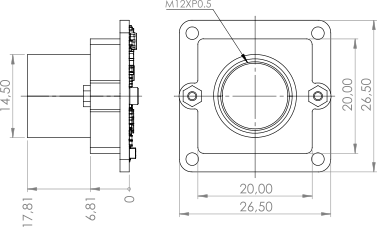
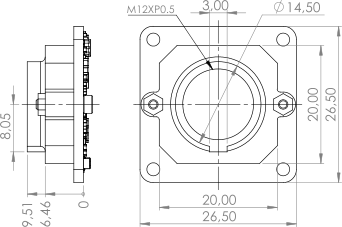
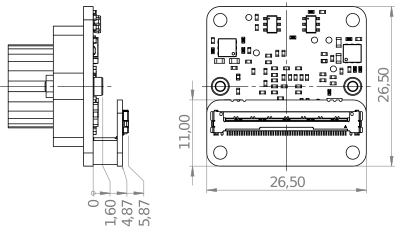
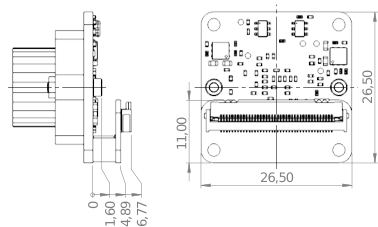
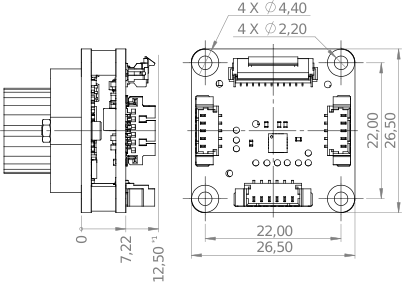
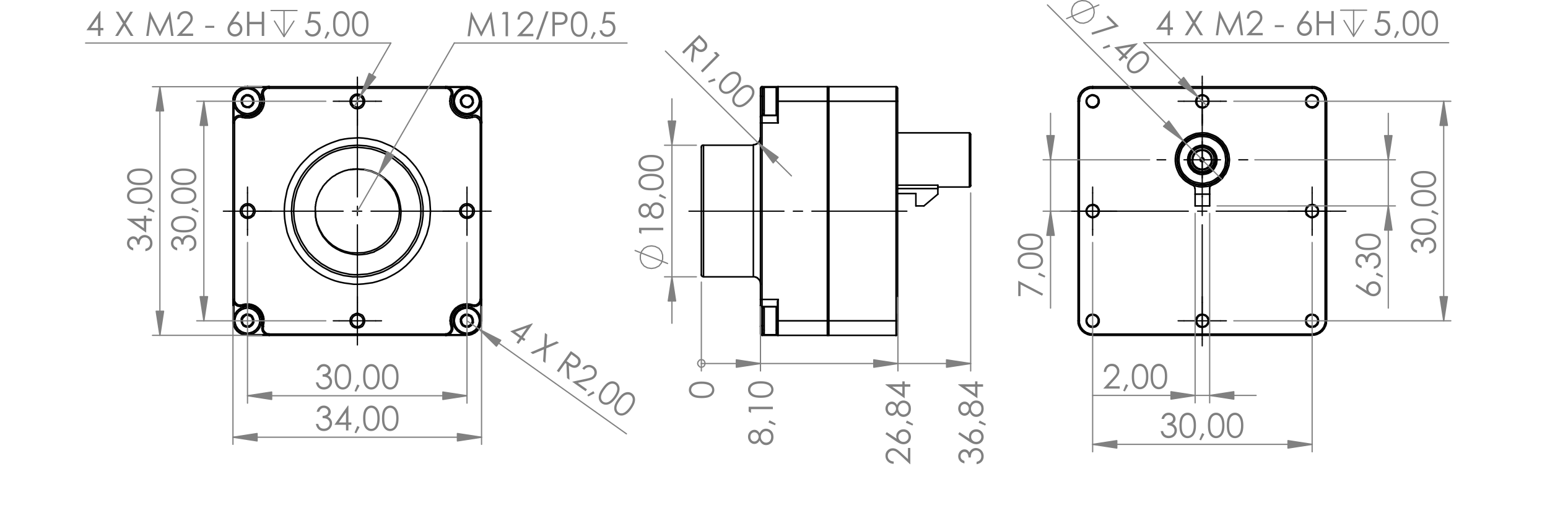
Mechanical Drawings#
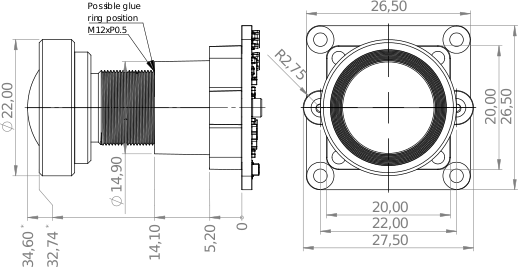
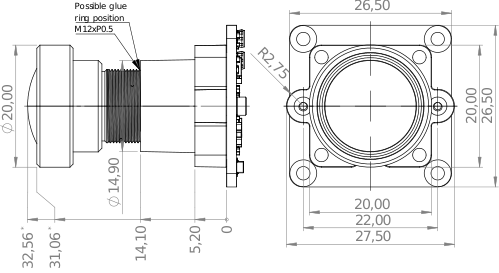
The following chapter contains the measured drawings split into the core segments of the product.
Bare Sensor Module
with Lens
with Lens Mount only
with Interface Adapter
with Housing (GMSL3A only) and Lens.
All measures refer to the backside of the sensor module PCB and, this way, allow the acquisition of the overall measures. Units of measurement are expressed in milimeters [mm]².
Sensor Module (Bare FSM:GO)#
Interface: PixelMate#
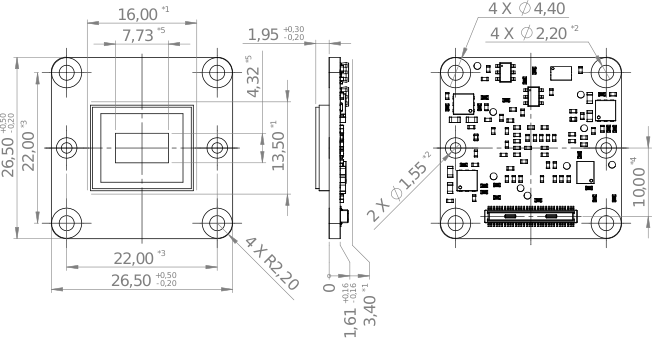
*1 - clearance area
*2 - holes size tolerance +/-0,1mm
*3 - holes position tolerance +/-0,1mm
*4 - connector size & alignment tolerance (X,Y,Z,tilt) +/-0,20mm
*5 - center of active sensor area is aligned with center of sensor board area
sensor active area size & alignment tolerance (X,Y,Z,tilt) +/-0.25mm
2 All mechanical components of the module assembly are subject to form and dimensional tolerances; therefore, sufficient mechanical clearance must be provided during integration, particularly around the lens and lens mount. The placement of electrical components on the PCBs (excluding connectors) may change without prior notice.
FSM:GO with Lens#
L54A: 54° HFOV (LH: M12)#
L100A: 100° HFOV (LH: M12)#
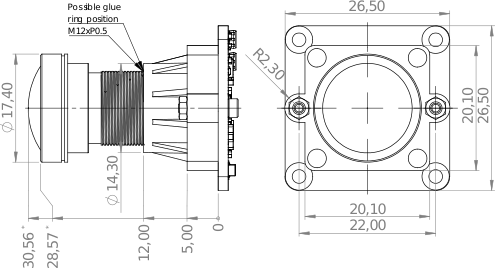
L110A: 110° HFOV (LH: M12)#
FSM:GO with Mount#
M12A:#
8.6 mm Height
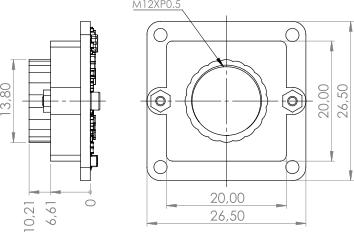
M12B:#
12.5 mm Height
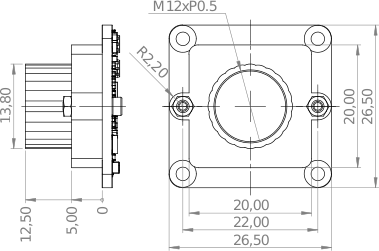
M12C:#
16.2 mm Height
M12D:#
7.9 mm Height (wider fitting)
FSM:GO with Interface Adapter#
PM: See Bare Sensor Module#
Note
Interface adapters fixed with screws for transport, mounting screws not included in product photos and drawings.
MC50A: MicroCoax (50 pin)#
FFC40A: Flat-Flex Cable (40 pin)#
GMSL3A: (FAKRA, Single Coax)#
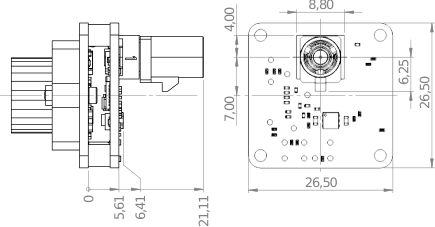
P22A: Flat-Printed Circuit Cable (22 pin)#
FSM:GO with Housing#
M12H1: No Lens – Height 1
IF: GMSL3A mandatory
M12H1: No Lens – Height 2
IF: GMSL3A mandatory
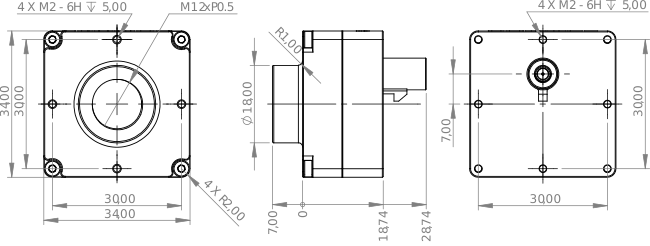
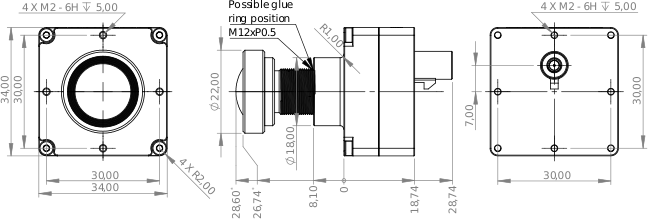
M12H - L54A: 54° HFOV - LH: M12H (lens holder is part of housing)
IF: GMSL3A (mandatory)
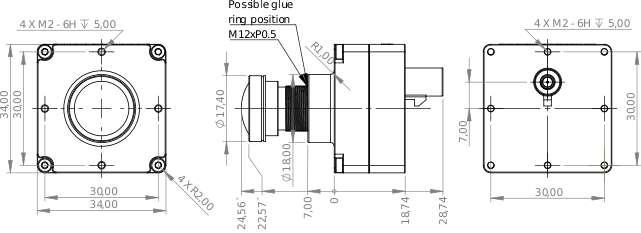
M12H - L100A: 100° HFOV - LH: M12H (lens holder is part of housing)
IF: GMSL3A (mandatory)
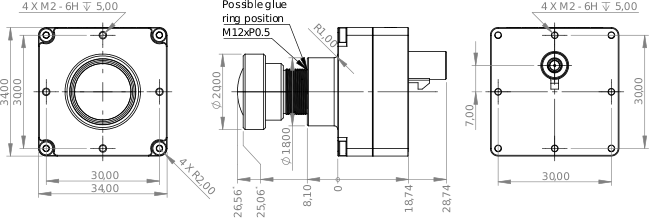
M12H - L110A: 110° HFOV - LH: M12H (lens holder is part of housing)
IF: GMSL3A (mandatory)
Platform & Software Specification#
The FSM:GO comes with ongoing and off-the-shelf driver and ISP tuning support for a number of platforms and devices, like the latest generation of NVIDIA Jetson Developer Kits, the NXP i.MX8MP Developer Kit and the Raspberry Pi 5.
Respective devices, implemented sensor and ISP features, as well as the archived performance are directly related to the capabilities of each processing platform and the software package maintained by its vendor. Check out our GitHub repository for all available driver releases as well as our online documentation for any hardware references.