
FPA-2.A/96B-V1#
Dual FPA to 96Boards.org Consumer Edition:
Two MIPI CSI-2 Inputs with 4- and 2-Lanes
Signal routing and I2C multiplexing
EEPROM for dynamic device tree management
Testpoints to important sensor signals
Configuration of trigger routing
Compatible Processor Boards:
96boards Consumer Edition (CE)

Top View |
Bottom View |
|
|
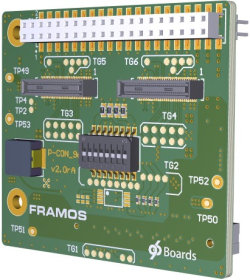

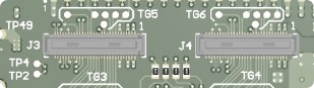
J3, J4: Image Sensor Connectors#
Name |
Description |
Connector Type |
Orientation |
|---|---|---|---|
J3 |
Port 1, 4-Lanes CSI-2, to FSA |
Hirose DF40HC(4.0)-60DS-0.4V |
Pin 1 Printed on PCB next to each connector. |
J4 |
Port 2, 4-Lanes CSI-2, to FSA |
Hirose DF40HC(4.0)-60DS-0.4V |
Pin 1 Printed on PCB next to each connector. |
Table: Image Sensor Connectors on FPA-2.A/A-V1
All ports provide the same pinout. The pin assignment is according to the corresponding FSA.
Caution
Direct connection of FSM to FPA (without FSA) or wrong cable orientation will lead to permanent damage of FSM, Adapters or the Processor Board. Using flex cable (FMA-FC-150/60-v1) between FSA and FPA is mandatory.
Image Sensor Support per Port
The table below shows the possible MIPI CSI-2 lane configurations per FSM / Processor Board combination, that are supported in HW using the FPA-2.A/96B-V1.
96Boards CE |
||
|---|---|---|
FSM with FSA-FTx/A (all) |
J5 |
J6 |
FSM-AR0144 |
2 |
2 |
FSM-AR0521 |
2 / 4 |
2 |
FSM-AR1335 |
2 / 4 |
2 |
FSM-HDP230 |
4 |
2 |
FSM-IMX264 |
4 |
|
FSM-IMX283 |
4 |
|
FSM-IMX290, 327 |
2 / 4 |
2 |
FSM-IMX296, 297 |
1 |
1 |
FSM-IMX304 |
4 |
|
FSM-IMX334 |
4 |
|
FSM-IMX335 |
2 / 4 |
2 |
FSM-IMX412, 477, 577 |
2 / 4 |
2 |
FSM-IMX415, 715 |
2 / 4 |
2 |
FSM-IMX462, 662 |
2 / 4 |
2 |
FSM-IMX464 |
2 / 4 |
2 |
FSM-IMX485, 585 |
2 / 4 |
2 |
FSM-IMX530 |
4 |
|
FSM-IMX565, 568 |
2 / 4 |
2 |
FSM-IMX678 |
2 / 4 |
2 |
Table: Image Sensor Support per Port with FPA-2.A/96B-V1
J5: Processor Board Connector#
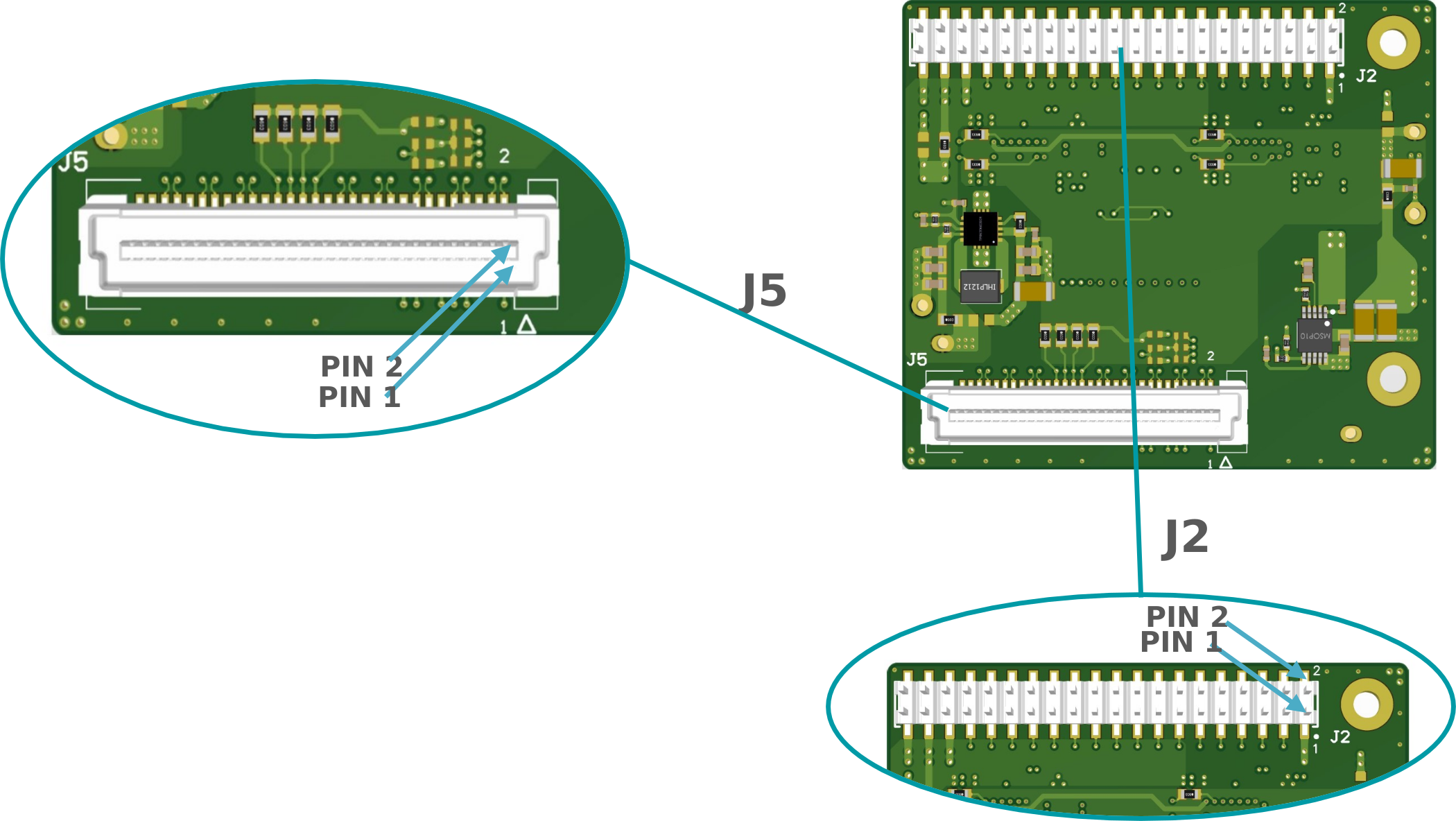
Label: J5
Type: 61083-063402LF
Pinout:
Pin # |
Name |
Pin # |
Name |
|---|---|---|---|
1 |
SPI_MOSI |
2 |
D_CLK_0_P (J3) |
3 |
NC |
4 |
D_CLK_0_N (J3) |
5 |
NC |
6 |
GND |
7 |
SPI_CS |
8 |
D_DATA_0_P (J3) |
9 |
SPI_SCK |
10 |
D_DATA_0_N (J3) |
11 |
SPI_MISO |
12 |
GND |
13 |
GND |
14 |
D_DATA_1_P (J3) |
15 |
MCLK_0 |
16 |
D_DATA_1_N (J3) |
17 |
MCLK_1 |
18 |
GND |
19 |
GND |
20 |
D_DATA_2_P (J3) |
21 |
NC |
22 |
D_DATA_2_N (J3) |
23 |
NC |
24 |
GND |
25 |
GND |
26 |
D_DATA_3_P (J3) |
27 |
NC |
28 |
D_DATA_3_N (J3) |
29 |
NC |
30 |
GND |
31 |
GND |
32 |
I2C_0_SCL |
33 |
NC |
34 |
I2C_0_SDA |
35 |
NC |
36 |
I2C_2_SCL |
37 |
GND |
38 |
I2C_2_SDA |
39 |
NC |
40 |
GND |
41 |
NC |
42 |
D_DATA_4_P (J4) |
43 |
GND |
44 |
D_DATA_4_N (J4) |
45 |
NC |
46 |
GND |
47 |
NC |
48 |
D_DATA_5_P (J4) |
49 |
GND |
50 |
D_DATA_5_N (J4) |
51 |
NC |
52 |
GND |
53 |
NC |
54 |
D_CLK_0_P (J4) |
55 |
GND |
56 |
D_CLK_0_N (J4) |
57 |
NC |
58 |
GND |
59 |
NC |
60 |
NC |
Label: J1/J2
Type: 61083-063402LF
Pinout:
Pin # |
Name |
Pin # |
Name |
|---|---|---|---|
1 |
GND |
2 |
GND |
3 |
96B_UART0_CTS |
4 |
96B_PWR_BTNn |
5 |
96B_UART0_TXD |
6 |
96B_PWR_BTNn |
7 |
96B_UART0_RXD |
8 |
96B_SPI0_CLK |
9 |
96B_UART0_RTS |
10 |
96B_SPI0_MISO |
11 |
96B_UART1_TXD |
12 |
96B_SPI0_CS |
13 |
96B_UART1_RXD |
14 |
96B_SPI0_MOSI |
15 |
96B_SCL_0 |
16 |
96B_PCM_FS |
17 |
96B_SDA_0 |
18 |
96B_PCM_CLK |
19 |
96B_SCL_1 |
20 |
96B_PCM_DO |
21 |
96B_SDA_1 |
22 |
96B_PCM_DI |
23 |
96B_GPIO_A |
24 |
96B_GPIO_B |
25 |
96B_GPIO_C |
26 |
96B_GPIO_D |
27 |
96B_GPIO_E |
28 |
96B_GPIO_F |
29 |
96B_GPIO_G |
30 |
96B_GPIO_H |
31 |
CAM0_RST_0 |
32 |
CAM0_PW_EN_0 |
33 |
CAM1_RST_0 |
34 |
CAM1_PW_EN_0 |
35 |
96B_1V8 |
36 |
96B_SYS_DCIN |
37 |
96B_5V0 |
38 |
GND |
39 |
GND |
40 |
GND |
Table: Pinout of FPA-2.A/96B-V1 connector to 96Boards.org Consumer Edition Standard
SW1: Configuration Switch#
The DIP switch SW1 is for interconnecting FSA’s triggering signals (XVS, XHS and XTRIG). It is designated to interconnect XVS, XHS and XTRIG pins from FPA in parallel to both FSA connectors.
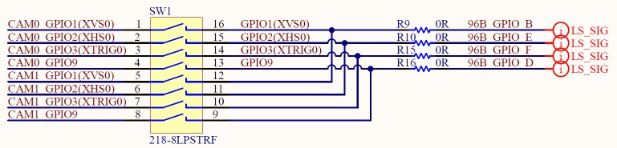
Table: Configuration of SW1 on FPA-2.A/96B-V1#
Default state of DIP switch
SW1 – all positions OFF (XVS/XHS pins are NOT interconnected)
TGx, TPx: Test Groups and Test Points#
Ungrouped (according to silk print)#
Label |
Signal |
Label |
Signal |
|---|---|---|---|
TP2 |
GPIO4(MCLK2) |
TP51 |
5V0_VDD |
TP4 |
GPIO5(MCLK3) |
TP52 |
GND |
TP49 |
1V8_VDD |
TP53 |
GND |
TP50 |
3V8_VDD |
TG1: Clocks and SPI

Label |
Signal |
Label |
Signal |
|---|---|---|---|
TP1 |
MCLK_0 |
TP55 |
SPI_CS |
TP3 |
MCLK_1 |
TP56 |
SPI_SCK |
TP54 |
SPI_MOSI |
TP57 |
SPI_MISO |
TG2: Synchronisation Signals
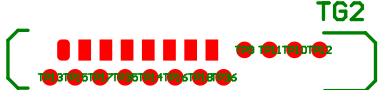
Label |
Signal |
Label |
Signal |
|---|---|---|---|
TP9 |
CAM0_I2C_0_SCL(SPI_SCK) |
TP18 |
CAM1_GPIO3(XTRIG0) |
TP10 |
CAM1_I2C_0_SCL(SPI_SCK) |
TP35 |
CAM0_GPIO9 |
TP11 |
CAM0_I2C_0_SDA(SPI_MOSI) |
TP36 |
CAM1_GPIO9 |
TP12 |
CAM1_I2C_0_SDA(SPI_MOSI) |
||
TP13 |
CAM0_GPIO1(XVS0) |
||
TP14 |
CAM1_GPIO1(XVS0) |
||
TP15 |
CAM0_GPIO2(XHS0) |
||
TP16 |
CAM1_GPIO2(XHS0) |
||
TP17 |
CAM0_GPIO3(XTRIG0) |
TG3: Control Signals and GPIOs J3 (CAM0)
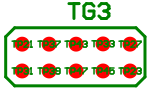
Label |
Signal |
Label |
Signal |
|---|---|---|---|
TP21 |
CAM0_PW_EN_1 |
TP37 |
CAM0_GPIO10 |
TP23 |
CAM0_GPIO15(SPI_MISO) |
TP39 |
CAM0_GPIO11 |
TP27 |
CAM0_RST_1 |
TP43 |
CAM0_GPIO16(SYS_PW_EN) |
TP31 |
CAM0_GPIO7 |
TP45 |
CAM0_I2C_1_SCL |
TP33 |
CAM0_GPIO8 |
TP47 |
CAM0_I2C_1_SDA |
TG4: Control Signals and GPIOs J4 (CAM1)
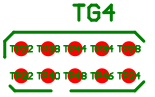
Label |
Signal |
Label |
Signal |
|---|---|---|---|
TP22 |
CAM1_PW_EN_1 |
TP38 |
CAM1_GPIO10 |
TP24 |
CAM1_GPIO15(SPI_MISO) |
TP40 |
CAM1_GPIO11 |
TP28 |
CAM1_RST_1 |
TP44 |
CAM1_GPIO16(SYS_PW_EN) |
TP32 |
CAM1_GPIO7 |
TP46 |
CAM1_I2C_1_SCL |
TP34 |
CAM1_GPIO8 |
TP48 |
CAM1_I2C_1_SDA |
TG6: Control Signals and GPIOs J3 (CAM0)
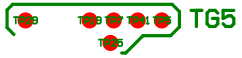
Label |
Signal |
Label |
Signal |
|---|---|---|---|
TP5 |
CAM0_RST_0 |
TP25 |
CAM0_GPIO17(SPI_CS) |
TP7 |
CAM0_GPIO0(XMASTER0) |
TP29 |
CAM0_GPIO6 |
TP19 |
CAM0_PW_EN_0 |
TP41 |
CAM0_GPIO14 |
TG6: Control Signals and GPIOs J4 (CAM1)
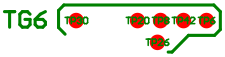
Label |
Signal |
Label |
Signal |
|---|---|---|---|
TP6 |
CAM1_RST_0 |
TP26 |
CAM1_GPIO17(SPI_CS) |
TP8 |
CAM1_GPIO0(XMASTER0) |
TP30 |
CAM1_GPIO6 |
TP20 |
CAM1_PW_EN_0 |
TP42 |
CAM1_GPIO14 |
Technical Drawing#
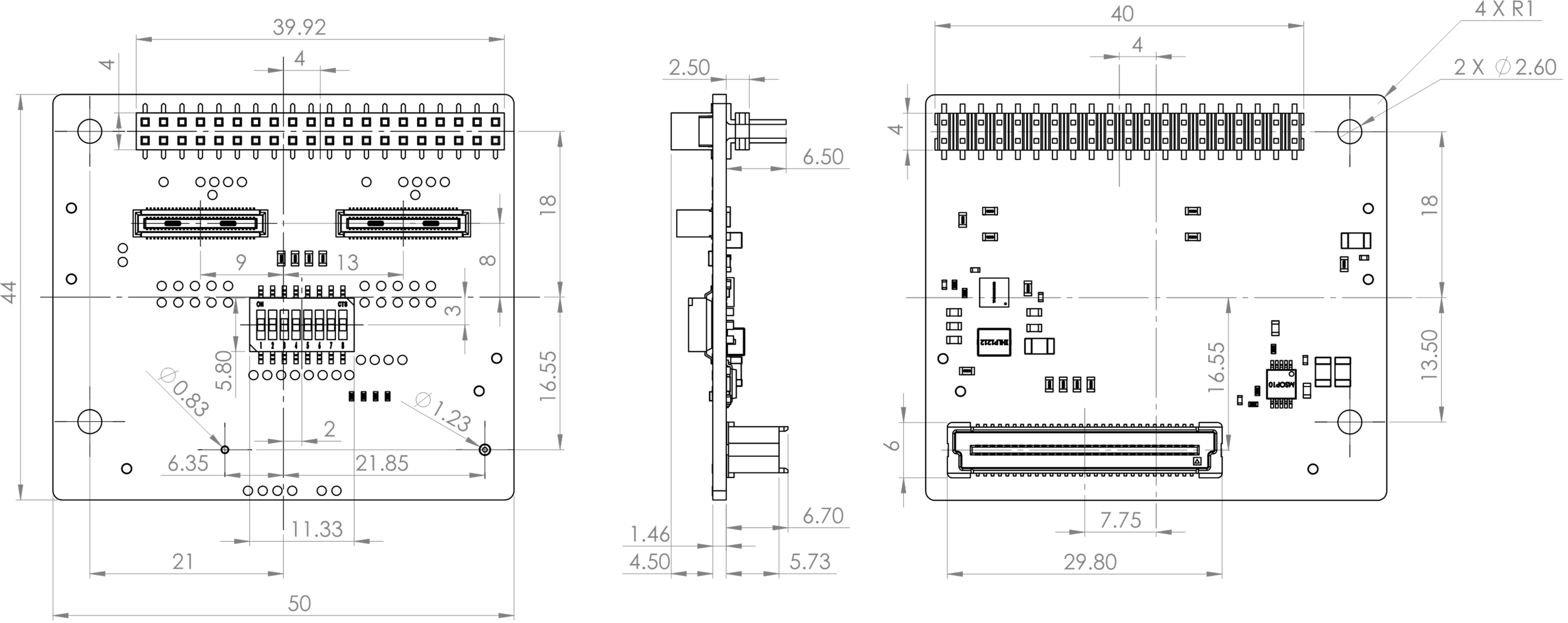
Figure: Technical Drawing of FPA-2.A/96B-V1#